



 Login
Login
 Subscribe



Inside the Observer: How we tracked the Prime Minister’s medevac
 By Jarrett Malifa
•
26 April 2026, 9:10AM
By Jarrett Malifa
•
26 April 2026, 9:10AM
Inside the Observer is a look at how our journalism comes together, from the first tip to publication, and the decisions made along the way.
Over the past week, questions have been raised and requests made to the Samoa Observer about how it gathered information and confirmed details surrounding the Prime Minister’s condition and medical evacuation. Here, we explain how we do our work.
The first tip
As soon as the tip came in that the Prime Minister was unwell, the focus inside the Samoa Observer newsroom shifted immediately. This was not just another lead. It involved the country’s leader, and the duty to ensure the public was accurately informed was taken seriously, meaning the information had to be properly verified.
The first alert came about 2.30pm on Friday, 10 April, just hours before the Prime Minister’s scheduled weekly press conference. A source indicated the Prime Minister was unwell and that preparations were underway for a possible medical evacuation to Auckland. Within minutes, senior reporters were reassigned. Junior S Ami and Sulamanaia Manaui Faulalo were asked to drop everything and verify what they could on the ground.
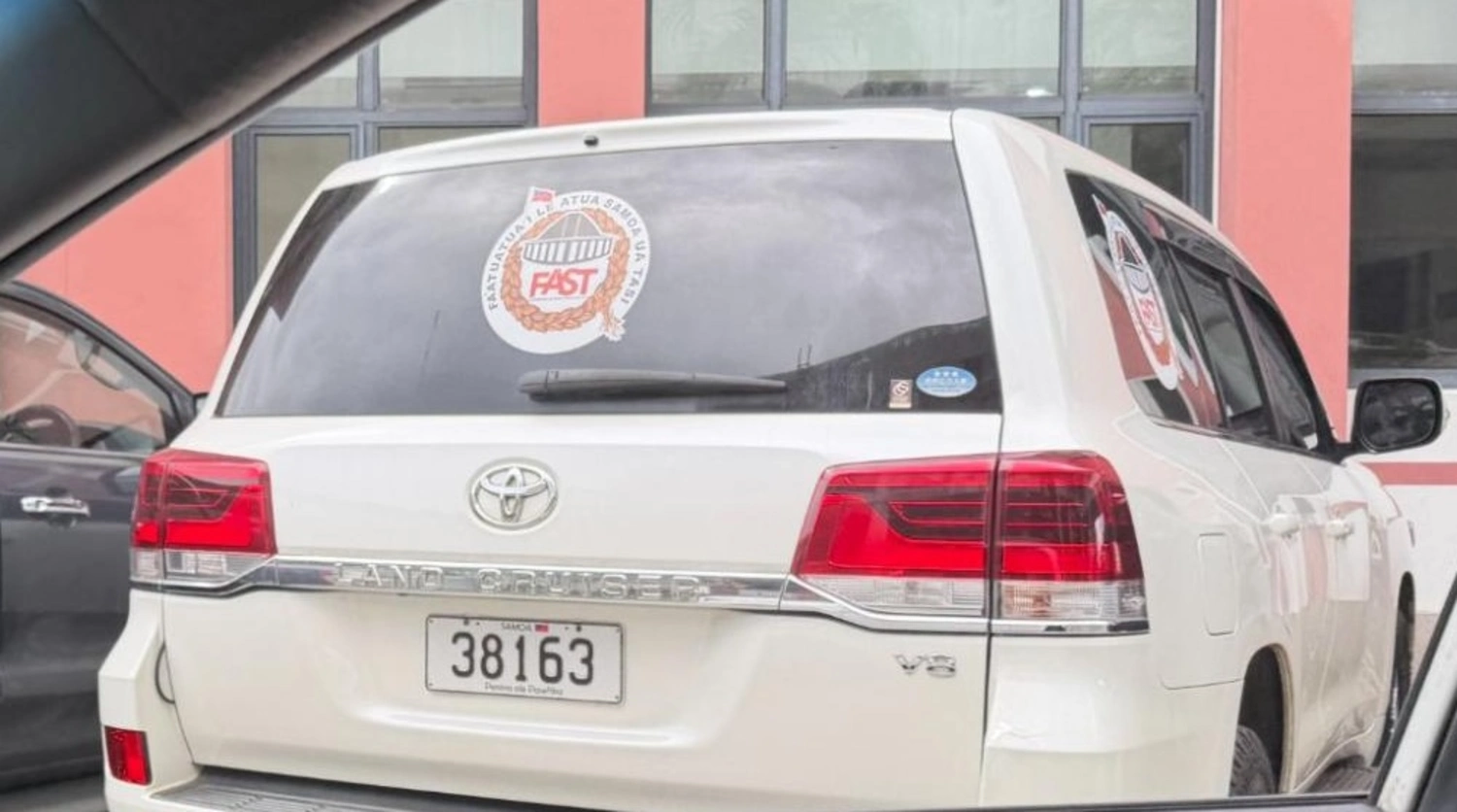
Initial checks were inconclusive. By around 3 pm, a Toyota Landcruiser SUV linked to the Prime Minister was seen at Tupua Tamasese Hospital. That alone was not enough. Even sources inside the hospital did not have clarity on his condition.
At 4 pm, the Prime Minister went live with his weekly press conference. There was no mention of travel or any immediate medical concern. He appeared to carry on as scheduled.
But for journalists watching closely, some signs added weight to the initial tip. The Samoa Observer, despite being banned from attending, monitored the broadcast in real time. Journalists familiar with the Prime Minister’s public appearances noted subtle differences in his delivery and presence.
On its own, that observation was not proof. But combined with earlier information and activity at the hospital, it raised further questions.
Building the picture over the weekend
Through the weekend, reporters continued to monitor the situation. Information began to surface gradually. Tips and sources started to come in, helping build a clearer picture. Several pointed to concerns involving the Prime Minister’s lungs and heart. One source, familiar with a person who had visited the Prime Minister, confirmed his condition was more serious than what the Observer had been told.
As the weekend went on, information did not come only through formal channels. Sources approached reporters in everyday settings, including cafes, bars and even hair salons, quietly sharing what they knew. Each piece of information was treated carefully, cross-checked and weighed against others.
By Monday, the Samoa Observer had confirmation that a medivac flight was scheduled for Wednesday afternoon.
Tracking the aircraft
From there, the newsroom widened its approach. It was no longer just about people and places, but patterns and systems. Reporters identified the aircraft typically used for medical evacuations in the region. Flight tracking tools were used to monitor movements in real time. Aircraft registrations, previous medivac missions and flight paths were cross-checked.
By Tuesday, 14 April, the Prime Minister was celebrating his 60th birthday with the Cabinet. While social media was filled with birthday messages, the Samoa Observer had already confirmed he would be medically evacuated the next day.
On Wednesday at about 8.50 am, the Prime Minister went live, sang a song and said he would travel to New Zealand for one week for what he described as “overdue medical checks,” but he did not mention a medical evacuation. By then, the Samoa Observer had already established that a medical aircraft was about to depart from Auckland for Samoa.
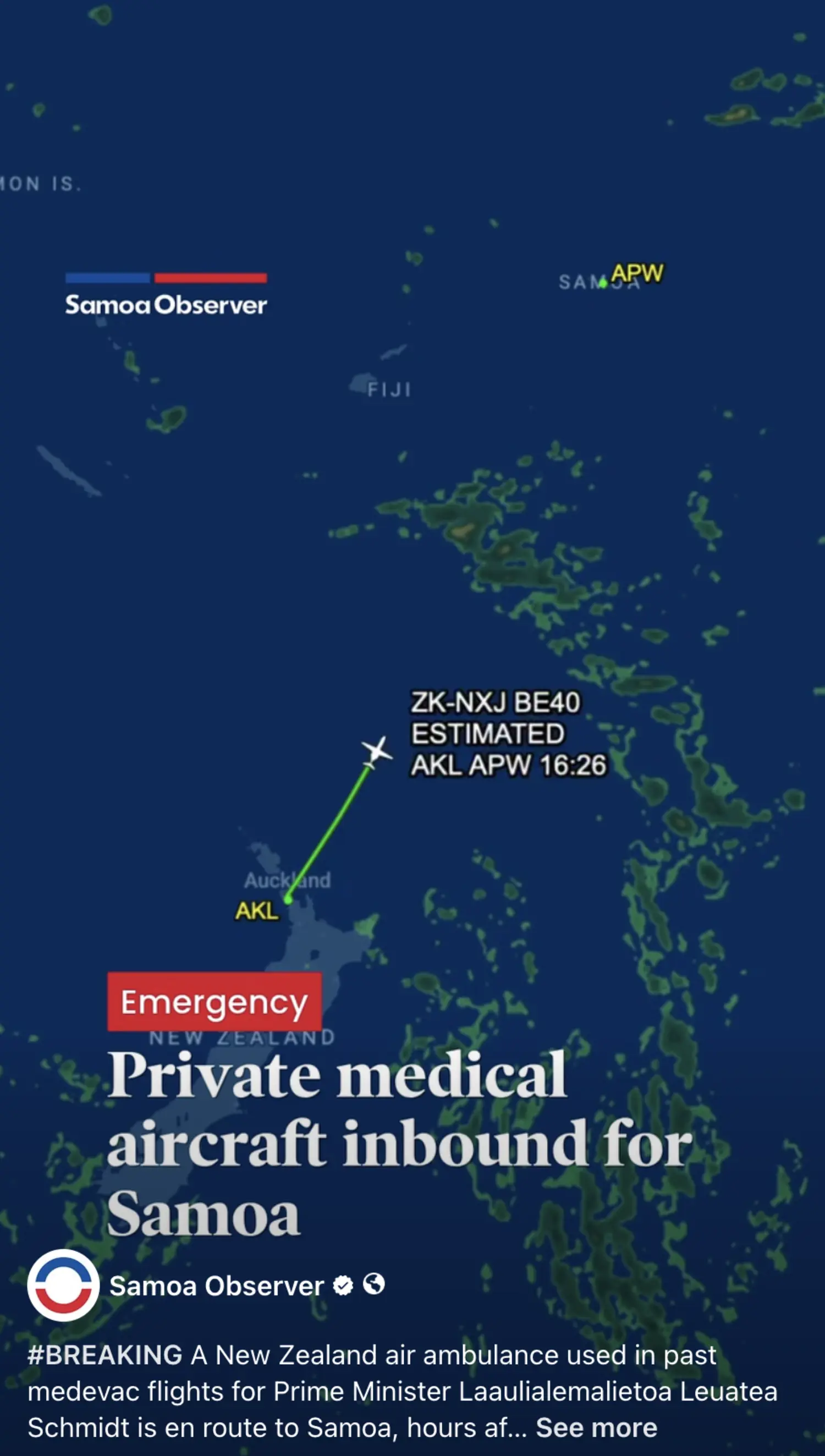
At exactly 12.11 pm, a Beechcraft with tail number ZK-NXJ departed Auckland and was heading for Apia. It matched the profile of a medivac jet previously used in Samoa and had already been identified as the likely aircraft. Its timing aligned with earlier confirmation of a scheduled flight. The Samoa Observer immediately broke the story and reported the aircraft was airborne and incoming before there had been any clear public disclosure of a medivac.
On the ground at the airport
From there, it became about presence and timing.
Using satellite imagery, photojournalists Junior S Ami and Keith Ropati were tasked with identifying key locations and weather patterns before leaving for Faleolo to scout for key locations around the airport. The window to confirm events was narrow. With an Air New Zealand flight, a Fiji Airways flight and another private jet all arriving around the same time, the apron was set to be busy. Before its final approach, the medevac jet circled off the south coast near Lefaga to allow the Fiji Airways aircraft to land first before touching down at 4.26pm.
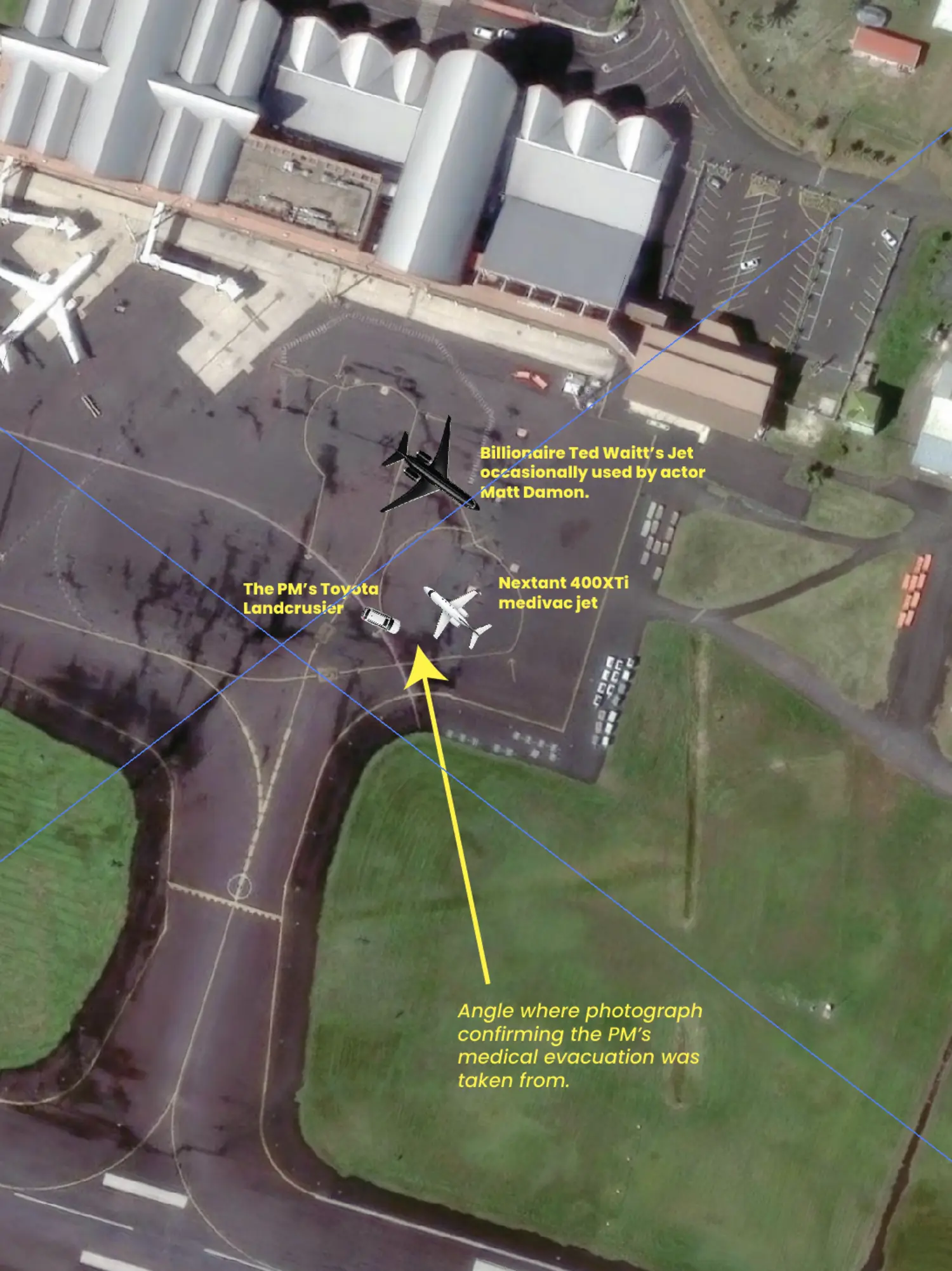
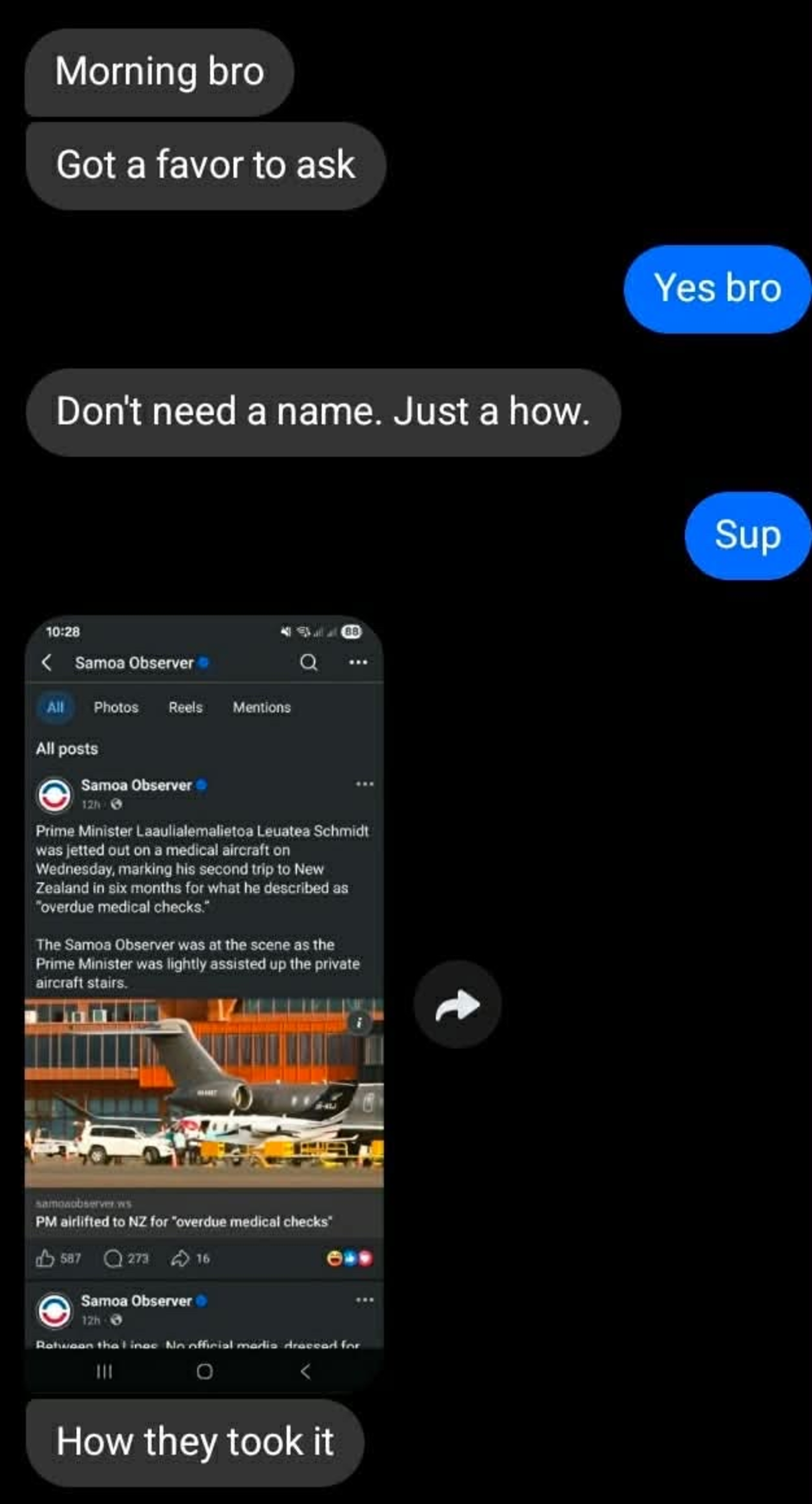
From the moment the Prime Minister’s vehicle approached the aircraft to when he boarded, only a few minutes were available. Distance and heat from the tarmac affected visibility, making it harder to capture clear images.
Experience guided positioning. Based on previous patterns, the Samoa Observer anticipated the medevac aircraft door would face north, towards the sea, limiting visibility from the terminal side. That helped determine the best vantage point.
The Samoa Observer captured images of the Prime Minister being lightly assisted onto the aircraft in a window of less than two minutes. It was the first visual confirmation of what had not been openly revealed.
Hospitalisation verification
Each step required restraint. Information was not rushed. Every detail was checked against multiple sources, whether on the ground, through digital tools or via contacts overseas.
By the end, the Samoa Observer had six sources verifying key details, including contacts within the Ministry of Health, Ministry of Finance, Police, Samoa Airport Authority and a close acquaintance of a senior FAST party member.
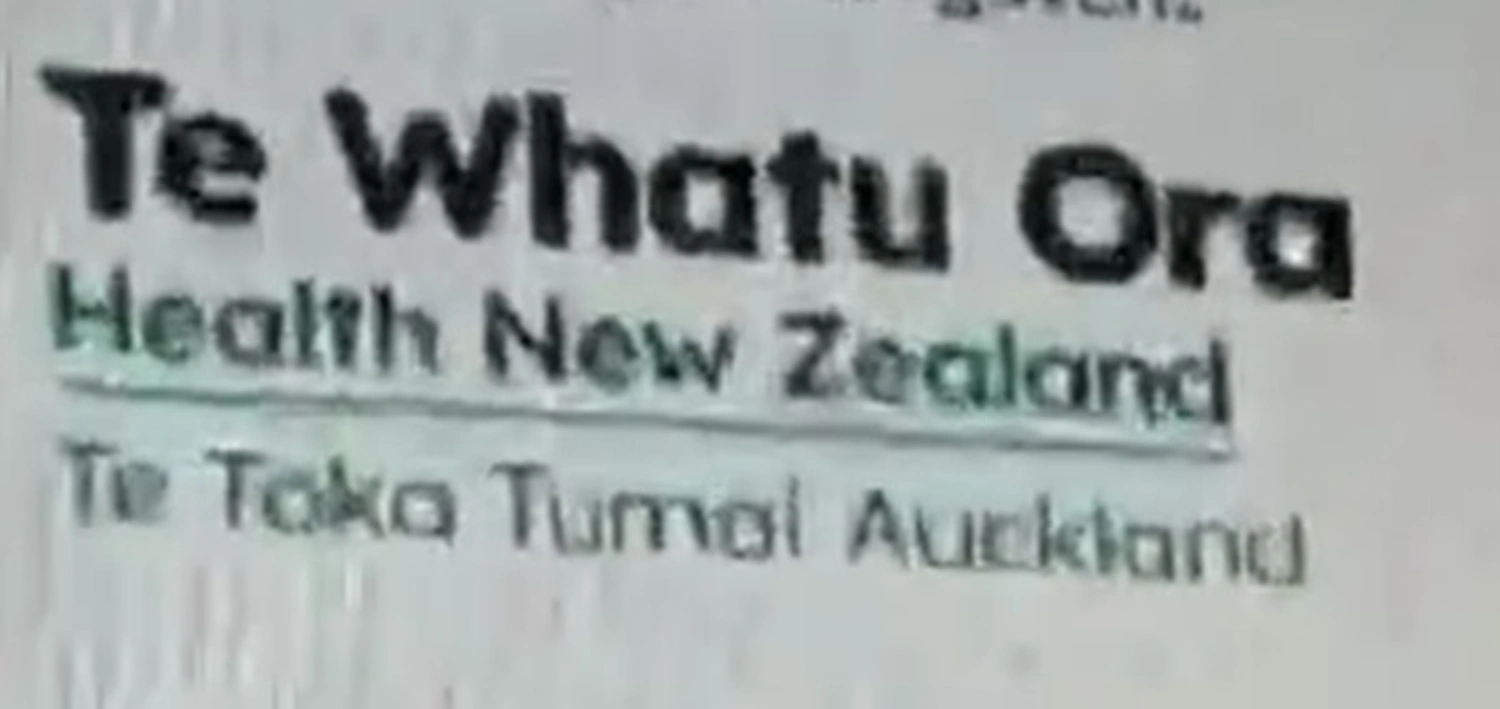
As the Prime Minister travelled, the focus shifted to confirming his location and condition in New Zealand. This was done through three sources in Auckland whose identities remain confidential. Two independent sources provided information that was cross-checked against each other.
Details such as the hospital unit, ward and aspects of his diagnosis were verified using matching identifiers, including a unique patient number and his date of birth. The fact that the Prime Minister had just turned 60 helped confirm the correct patient.
Sources in New Zealand also provided detailed medical information. The Samoa Observer chose not to publish the finer details, weighing public interest against privacy.
This work was carried out while the government had not officially confirmed the Prime Minister’s location or condition. Public statements were limited and, in some cases, downplayed.
The Acting Prime Minister eventually publicly revealed more about the Prime Minister’s condition, providing clarity that had not been shared earlier.
Why it matters
None of this happened in isolation. It was the result of combining traditional reporting with technology, experience and a network of sources built over time.
The absence of direct access and the presence of a ban on the Samoa Observer often mean more steps. It requires observation when questions go unanswered and verification when information is incomplete.
At its core, the approach remains simple.
The public has a right to know where its leader is and what condition he is in, especially when decisions at the highest level of government continue to affect daily life. That responsibility does not change based on access.
Despite questions raised by the government about how information and images were gathered, the Samoa Observer maintained a clear approach throughout. Every step was taken with care, within the law and without crossing boundaries.
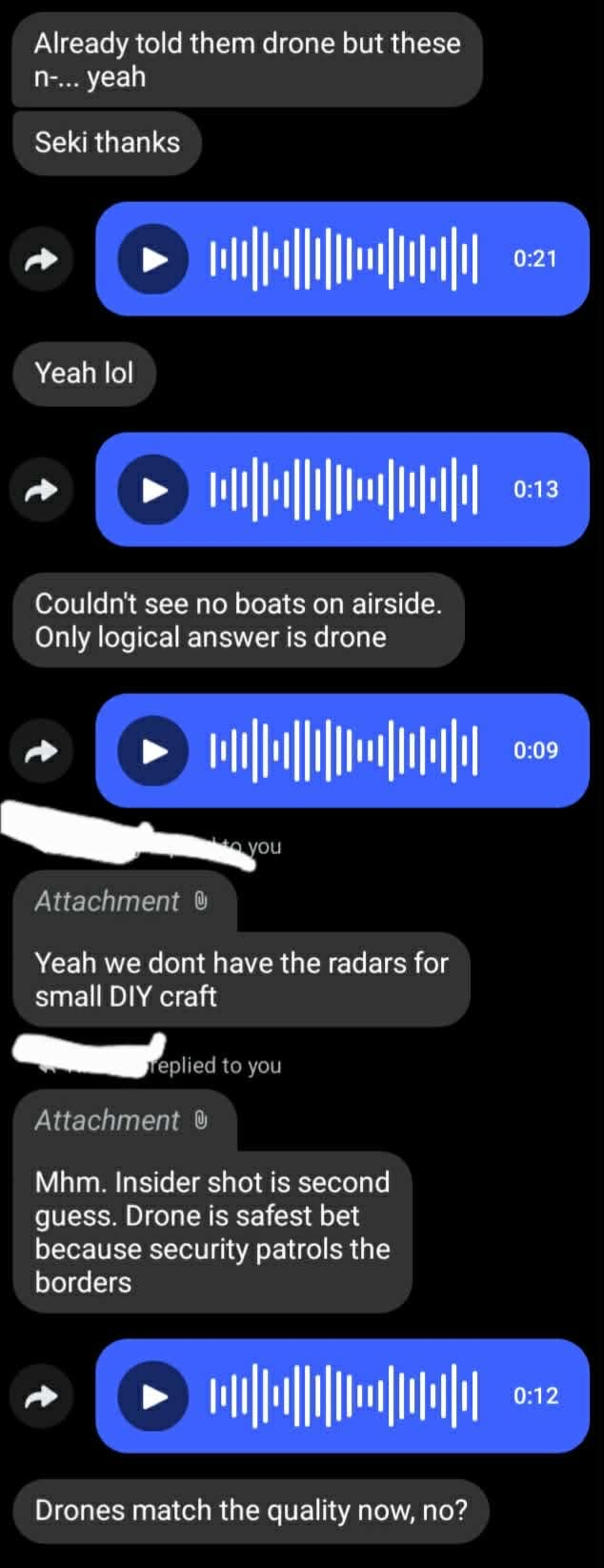
The work was carried out not to intrude, but to inform.
This is what reporting looks like behind the scenes. A series of deliberate steps, following a lead, testing it, building on it and only then presenting it.
The goal is not to be first for the sake of it. It is to be right. It is the responsibility of the press to provide, despite the Prime Minister’s health, an unvarnished account of the truth so the public is informed of where their Prime Minister is.




