



 Login
Login
 Subscribe
What Samoa’s District Development Bill 2026 means for district funding?

 By Sulamanaia Manaui Faulalo
•
14 March 2026, 7:30PM
By Sulamanaia Manaui Faulalo
•
14 March 2026, 7:30PM
In Parliament this week, a new law was passed that changes how millions of tala in government development funding are distributed to districts across the country.
The District Development Bill 2026, passed this week in the Legislative Assembly, restructures the system that funds community projects in each electoral constituency. The Minister in charge of the bill, Minister Moefaauouo Julius Tafunai, read the law aloud in parliament, which strengthens transparency and oversight, while members of parliament from the opposition party say it could centralise more control over local development funding.
Here is a breakdown of what the law does and how it affects Samoa’s current district development program.
What is the District Development Program (DDP)?
Since 2021, when the Fa'atuatua i le Atua Samoa ua Tasi (FAST) party formed the government, a manifesto pledge of $1 million tala per district led to development funds being allocated directly to each of Samoa’s 51 electoral districts through the Ministry of Women, Community and Social Development’s District Development Programme (DDP). The initiative was introduced to support community-driven development projects identified by districts.
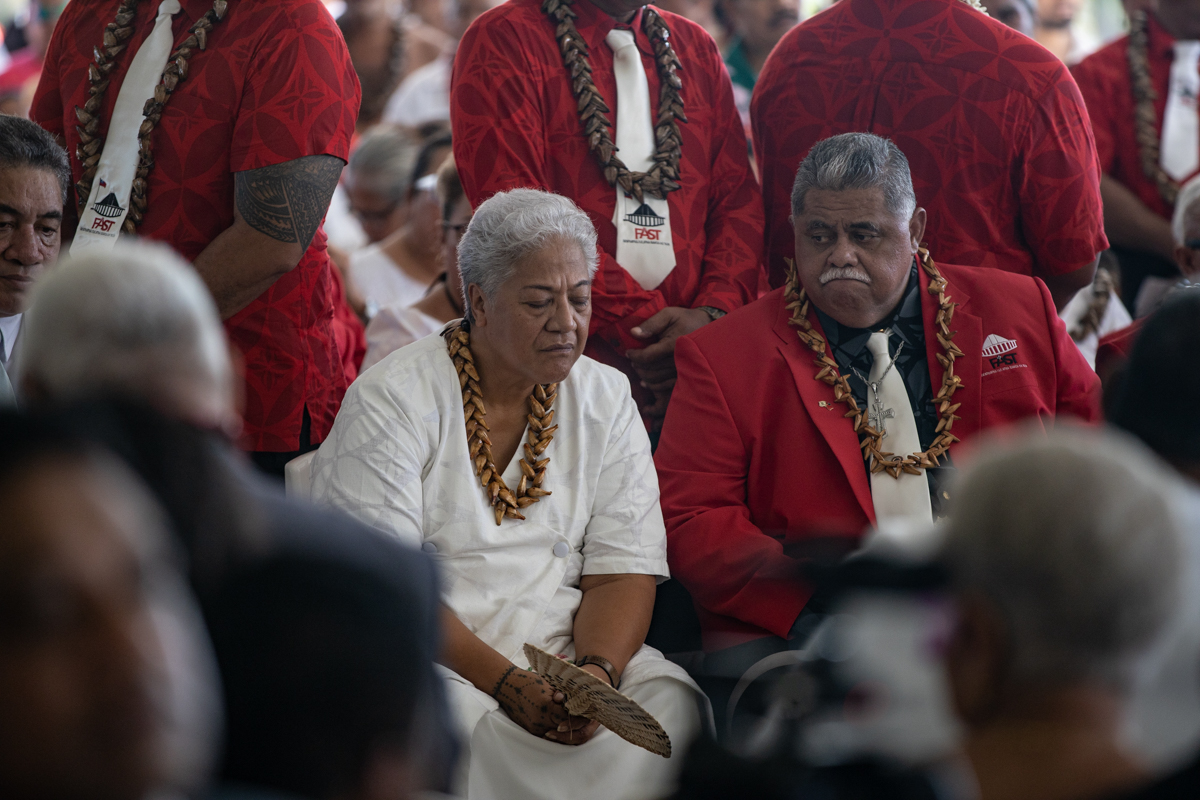
Under the original program, each district was to receive $1 million annually to fund initiatives such as community halls, roads, agricultural projects and other local infrastructure. District councils oversaw projects in their constituencies, working with the ministry to administer funding and submit spending reports. The program became a major source of local development funding and has supported a wide range of village-level projects across the country such as Palauli No.3, Fa'asaleleaga No.4, and Lotofaga.
Why has the program been controversial
Over time, the DDP has also faced scrutiny over how funds were managed and reported. Former Prime Minister Fiame Naomi Mataafa has said that, toward the end of the previous administration, several districts had not submitted the required reports detailing how development funds had been spent. Past reporting by the Samoa Observer highlighted concerns about accountability within some district councils and delays in project reporting.
One high-profile case involved the Fa’asaleleaga No. 2 constituency, where about $68,000 allocated for development was misused. Magele Sekati Fiaui was found guilty of eight corruption-related allegations, which included district grants for election purposes. The issue drew national attention and political debate over oversight of district funds. Today, the Fa'asaleleaga No. 2 district is the only one not to receive its funds.

The $1.8 million funding figure
In recent years, the funding for district development has grown to about $1.8 million per district. Previous reporting by the Samoa Observer noted that the figure reflects a combination of new allocations and funds that accumulated when some districts did not fully use or report earlier grants. By July 2026, the new government aim to distribute $2 million per district.
What the new law creates
The District Development Bill establishes a new body, the District Development Authority. The authority will be responsible for administering the district development program and overseeing the use of grant funds.
Under the law, the authority will:
Monitor the implementation of district development projects
publish key financial and planning documents
Detect and investigate possible misuse of grant money
Provide the government with advice on improvements to the program.
The authority will be governed by a five-member board, with directors appointed by the Head of State on the advice of Cabinet.

How districts will plan development projects
The law also establishes District Development Councils for each electoral constituency. These councils will be responsible for identifying development priorities and commissioning projects within their districts. To receive funding, councils must prepare:
A district development plan outlining long-term priorities
An annual work plan detailing projects to be funded each year.
These plans must align with national development priorities and must be approved by a government steering committee before funding can be released. The steering committee includes senior government officials and ministers, including the minister responsible for the program and the minister of finance. The funds become more tightly controlled by a national authority, rather than loosely administered through district committees.
Who leads district councils?
Each district council will be led by either a chairperson or two co-chairpersons. These chairpersons are appointed by the Cabinet but must have been candidates in the most recent election for that district. They do not need to be the sitting Member of Parliament. Council leaders may then appoint additional members to help oversee district projects.
New rules for how money can be used
The new law sets rules on how district development funds may be spent. Funds may be used for:
Approved development initiatives
Operating costs of district councils
Projects aligned with the district development plan.
The legislation also bans certain uses of grant money. For example, funds cannot be used for loan schemes, overseas seasonal work programs, alcohol, tobacco or firearms. Council members are also prohibited from receiving personal financial gain from district funds except for authorised salaries or allowances.

Election-period restrictions
The law introduces additional restrictions during election periods to prevent development funds from influencing campaigns. During an election period:
District councils cannot enter into new contracts
Grant money cannot be distributed unless it is approved by the authority.
These restrictions remain in place until new council leadership is appointed after the election.
Penalties for misuse
The legislation also introduces criminal penalties for misuse of district development funds. Members or officers of district councils who unlawfully benefit from grant money could face up to seven years imprisonment or a fine if convicted. Other offences include entering into contracts during election periods or failing to provide information requested by the authority.
When the law takes effect
The District Development Act will come into force on 1 July 2026. Existing district councils and development plans will continue temporarily while the new authority and governance system are established.




