



 Login
Login
 Subscribe
Study probes how heat affects children’s learning and health

A new research project in Samoa is investigating how rising heat and humidity linked to climate change may be affecting children’s health, wellbeing and learning in schools across the country.
The study will examine conditions at five primary and secondary schools, measuring heat and humidity in classrooms and outdoor areas through to the end of the school year.
Project lead Dr Roannie Ng Shiu, co-director of the Centre for Pacific and Global Health at the University of Auckland and associate professor at the National University of Samoa, said the research aims to provide evidence on how extreme temperatures affect children in school environments.
“Climate change is having a significant impact on the Pacific, and there are no cooling systems in these schools,” she said.
She added, “If we can quantify how much heat and humidity impact children, then hopefully we can improve their learning environments, so they can flourish.”
The project will also include focus groups with students and teachers to better understand how heat affects children’s mood, concentration, behaviour and learning.
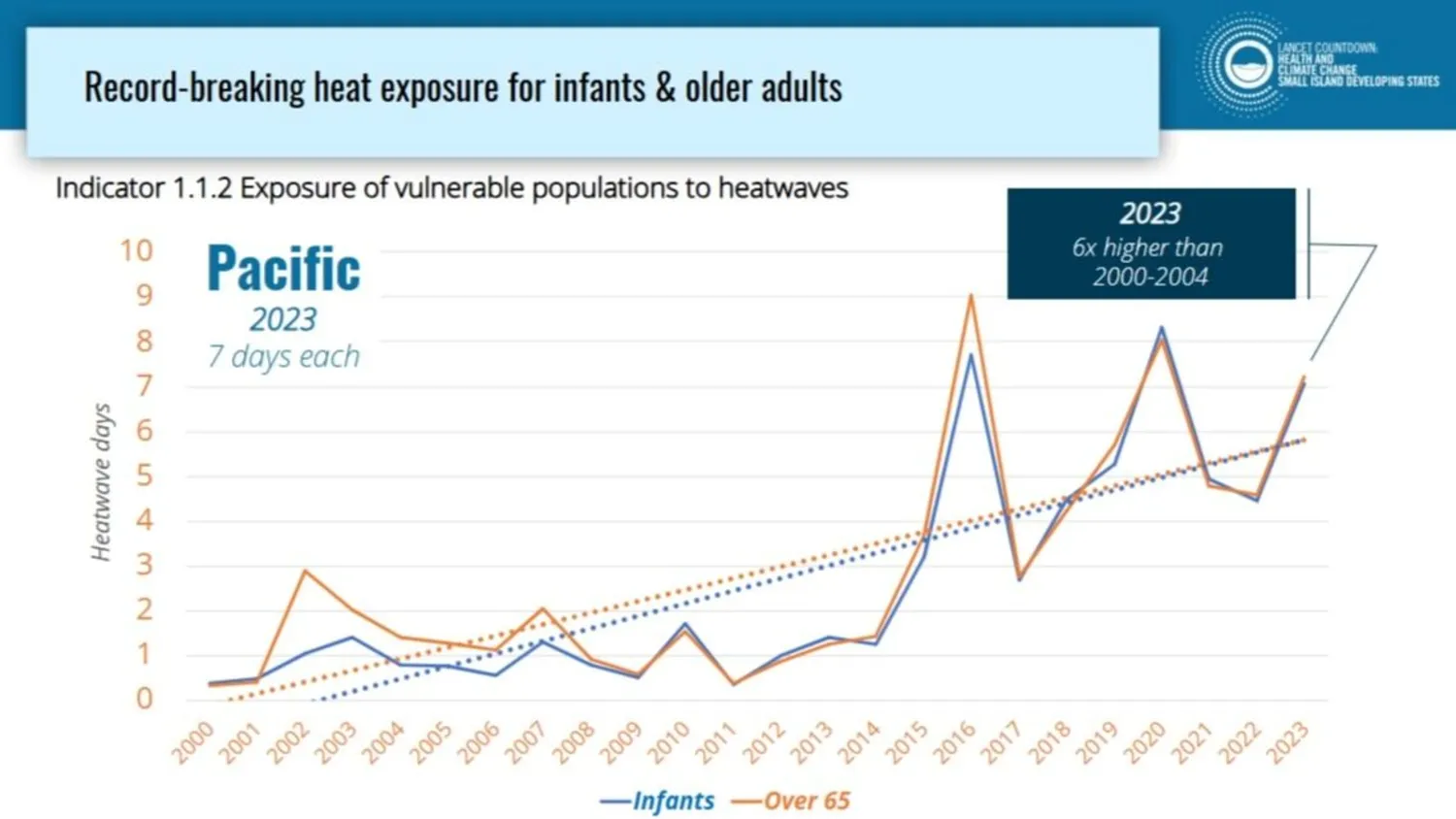
Ng Shiu said children aged under 15, who make up 19.5% of Sāmoa’s population, are particularly vulnerable to heat stress, along with those aged over 65.
She said there is currently no data showing how rising temperatures are affecting children’s health and wellbeing in Pacific Island schools, despite the region being heavily impacted by climate change.
Heatwaves are becoming more frequent, with temperatures rising above 28 degrees Celsius, she said.
Ng Shiu said extreme heat can lead to reduced cognitive performance, heat exhaustion and heat stroke.
“We hear when it gets terribly hot and humid, children tend to become more restless, lack concentration and can be hard to deal with,” she said.
“Children are at school at the hottest time of day, so it’s important to understand how that influences their health and their learning.”
She also pointed to wider climate impacts, saying more frequent cyclones and floods are leaving some children anxious and depressed.
“Children should have the right to grow up without having to worry about extreme weather events, which happen all the time now,” she said.
“They have the least power to do anything, so we’re passionate about projects that help reduce the impacts of climate change on children.”
The research is funded by the International Science Council and led by the National University of Samoa in partnership with the University of the South Pacific and the University of Sydney’s Heat and Health Research Centre.
Ng Shiu said the findings, expected later this year, will be used to guide regional and school strategies to better protect children from extreme heat. The team also plans to produce storybooks to share the results with children in an accessible format.
The long-term aim is to expand the research to other Pacific nations, including the Cook Islands, Fiji and Tonga.




